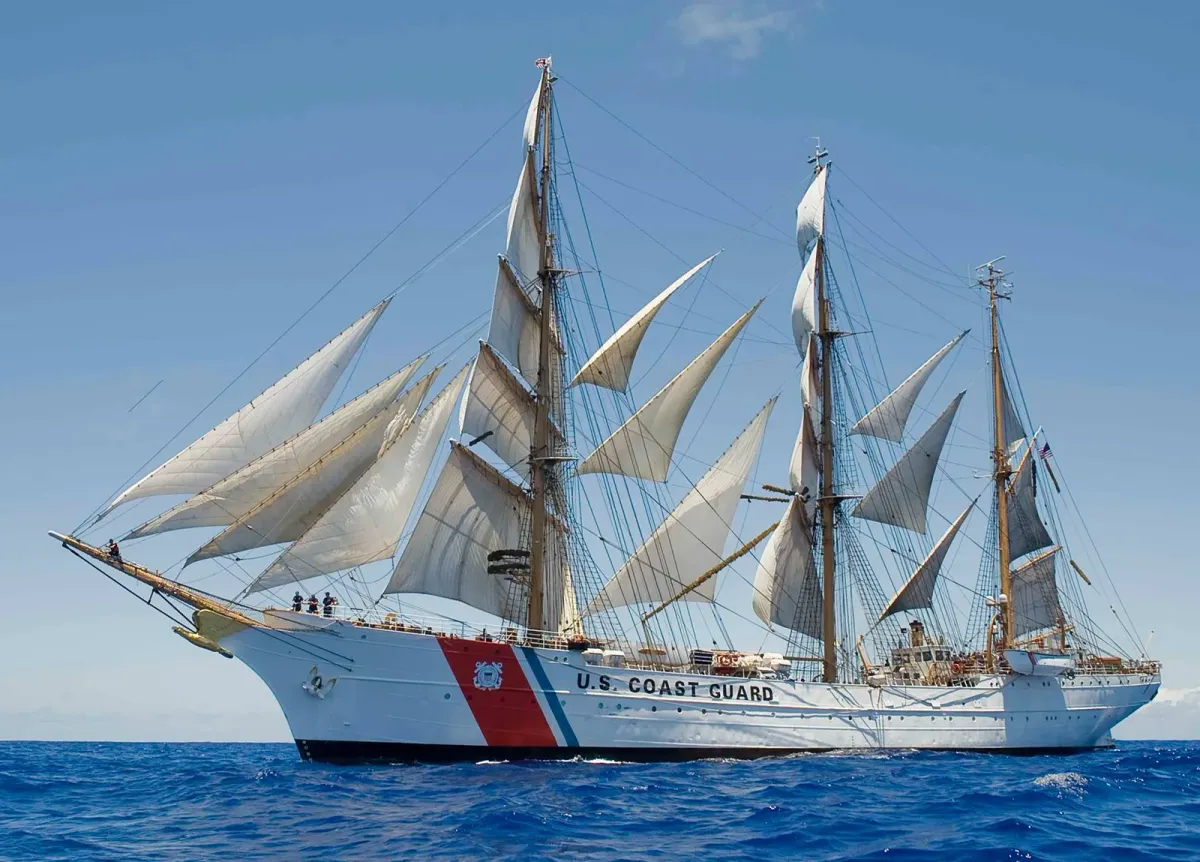
For Bay Shore families, the Coast Guard has never been far away. Just across Great South Bay, a Coast Guard station on Fire Island traces its roots to a lifesaving station built there in 1849. The Coast Guard itself began as several small federal agencies, each meeting a different need at sea, that were joined over many years.
Hamilton's Cutters
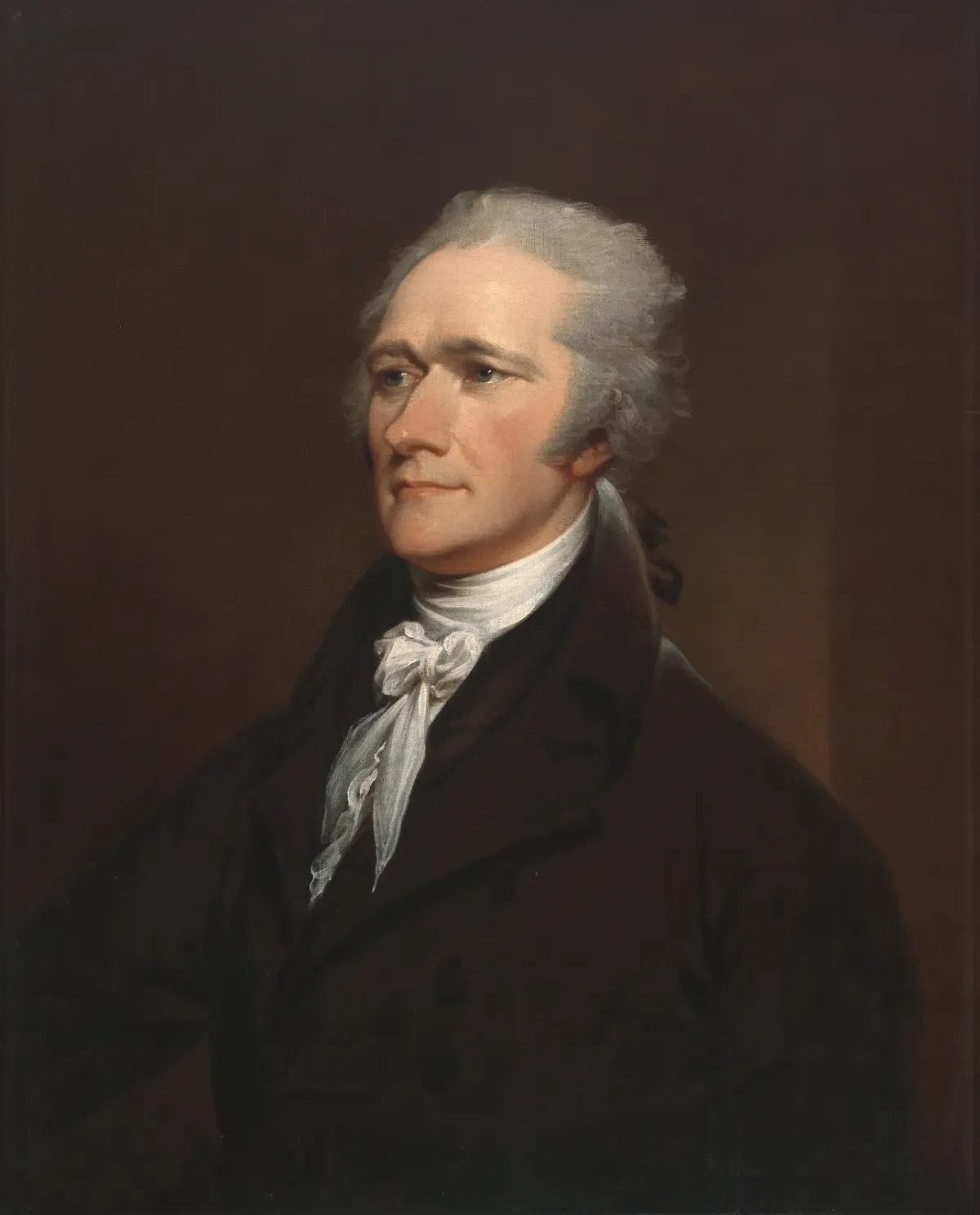
The Coast Guard counts August 4, 1790, as its birthday. That day Congress approved Treasury Secretary Alexander Hamilton's plan for ten cutters, small sailing ships that would enforce the new nation's tariff laws and stop smugglers. Often called the Revenue Marine, the fleet later became the Revenue Cutter Service.
In his 1791 instructions to the cutter captains, Hamilton reminded them that "their countrymen are freemen" and asked them to enforce the law without arrogance or rudeness. From 1790 until Congress created the Navy Department in 1798, Hamilton's cutters were the only armed ships the young nation had at sea. Over the next century the cutters fought in the nation's early wars and began helping ships in distress.
Keepers of the Lights
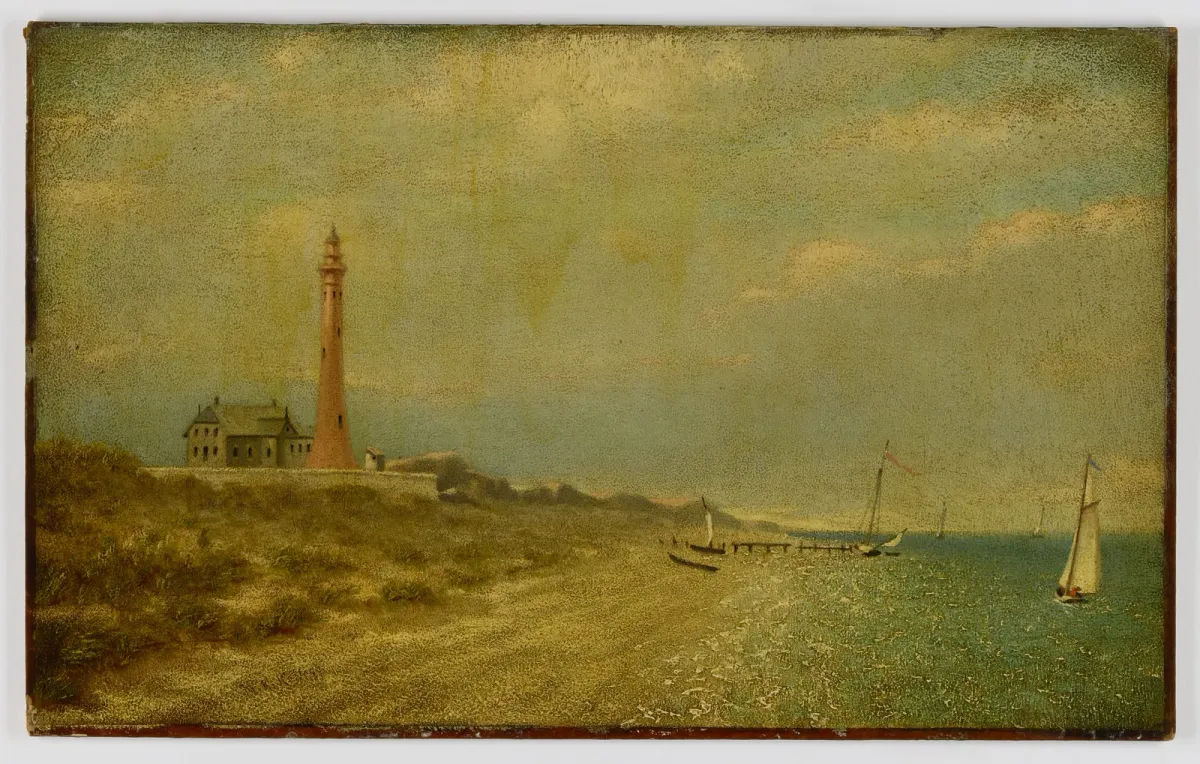
The oldest branch of the family is the lighthouse system. On August 7, 1789, Congress put the federal government in charge of the nation's lighthouses, beacons and buoys. There were only 12 lighthouses then, and none on Long Island's coast. The first Fire Island Light went into service near the inlet in 1826, and the taller tower that stands today was finished in 1858.
Surfmen on the South Shore
Ships bound for New York often sailed along Long Island's ocean side, and the sandbars off Fire Island wrecked many of them. On July 19, 1850, the ship Elizabeth was lost off what is now Point O'Woods. Ten people died, including the writer Margaret Fuller, and the publicity added to calls for better lifesaving.
The government had built its first Long Island lifesaving stations in 1849, after the Newell Act of 1848, but volunteers manned them. Congress paid for regular crews of surfmen in 1871 and made the Life-Saving Service a permanent agency in 1878, led by Sumner Kimball. Seven crews served on what is now Fire Island, at Fire Island, Point O'Woods, Lone Hill, Blue Point, Bellport, Smiths Point and Forge River.
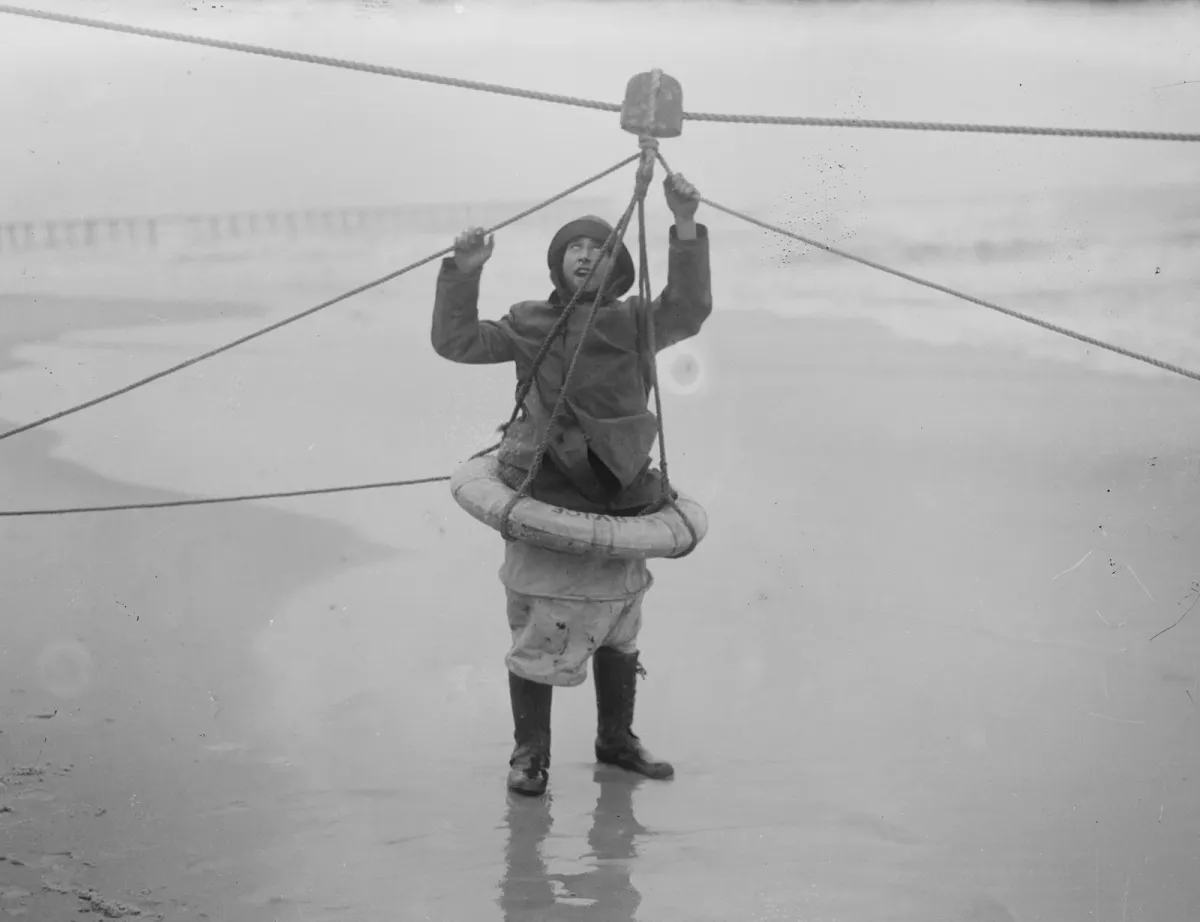
Surfmen drilled almost daily and walked the beach at night, watching for ships in trouble. They rowed surfboats through the breakers, or fired a line to a stranded ship with a small cannon called a Lyle gun and hauled people ashore in a breeches buoy, a life ring fitted with canvas leggings. Their unofficial motto, recorded by the National Park Service, was "You have to go out; you don't have to come back."
One Service From Many
On January 28, 1915, President Woodrow Wilson signed the law that combined the Revenue Cutter Service and the Life-Saving Service into the United States Coast Guard, under the Treasury Department.
The Lighthouse Service joined on July 1, 1939. Next came two older safety agencies: the Steamboat Inspection Service, created in 1852 to make steam vessels safer, and the Bureau of Navigation, set up in 1884 to register ships. The two merged in the 1930s as the Bureau of Marine Inspection and Navigation, and its safety duties passed to the Coast Guard in 1942, permanently in 1946. That is why the Coast Guard still inspects commercial ships and licenses merchant mariners.
In Time of War
When the United States entered World War I on April 6, 1917, the Coast Guard came under the Navy, and its cutters escorted convoys overseas. On September 26, 1918, a German submarine sank the cutter Tampa after a convoy run to Britain. All 131 people aboard died, 111 of them Coast Guardsmen, the heaviest American naval loss of life in combat during that war.
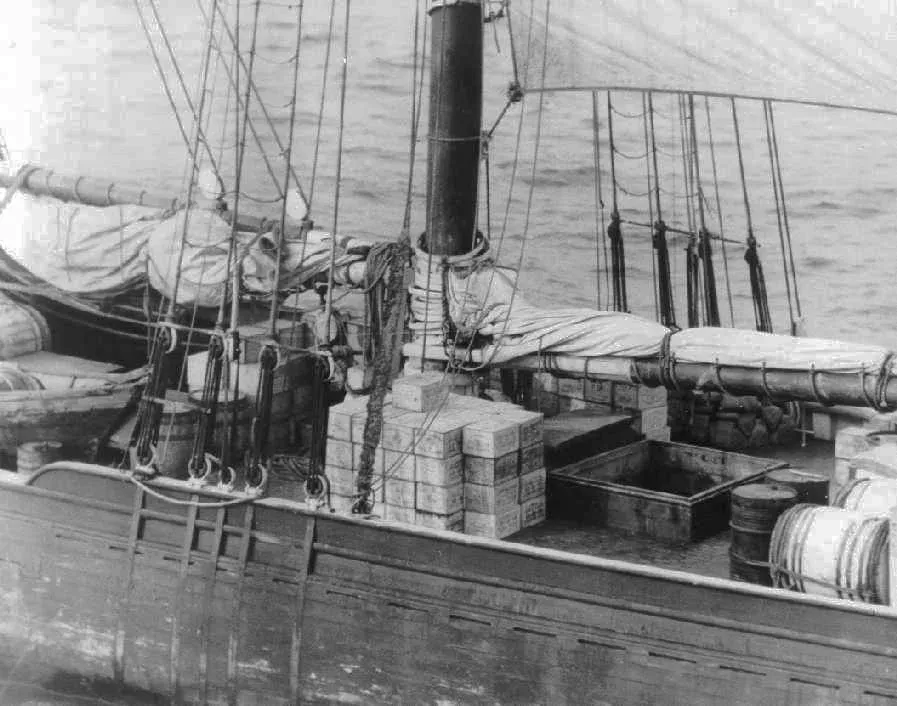
From January 1920 until Prohibition ended in 1933, the Coast Guard's main task was what it called the Rum War: stopping liquor smuggled in by sea. Ships loaded with liquor from Canada, Europe and the West Indies anchored in a line known as Rum Row, just outside American waters where the Coast Guard could not seize them, and fast contact boats ran their cargo ashore. New York's Rum Row, the largest in the country, lay at sea east of Long Island. Its liquor was run into New York Harbor or landed on Long Island or the New Jersey shore and trucked into the city.
Rum Row began just beyond the 3-mile limit, but a 1924 treaty let the Coast Guard board suspect foreign ships within an hour's run of the coast, pushing it out to about 12 miles. That year Congress paid for the largest expansion the service had yet seen. The Navy lent it old destroyers, eventually 31, to shadow the supply ships and keep them from unloading, and the Coast Guard added more than 200 patrol boats 75 feet long, nicknamed six-bitters. By the late 1920s the service had grown from about 4,000 men to about 10,000.
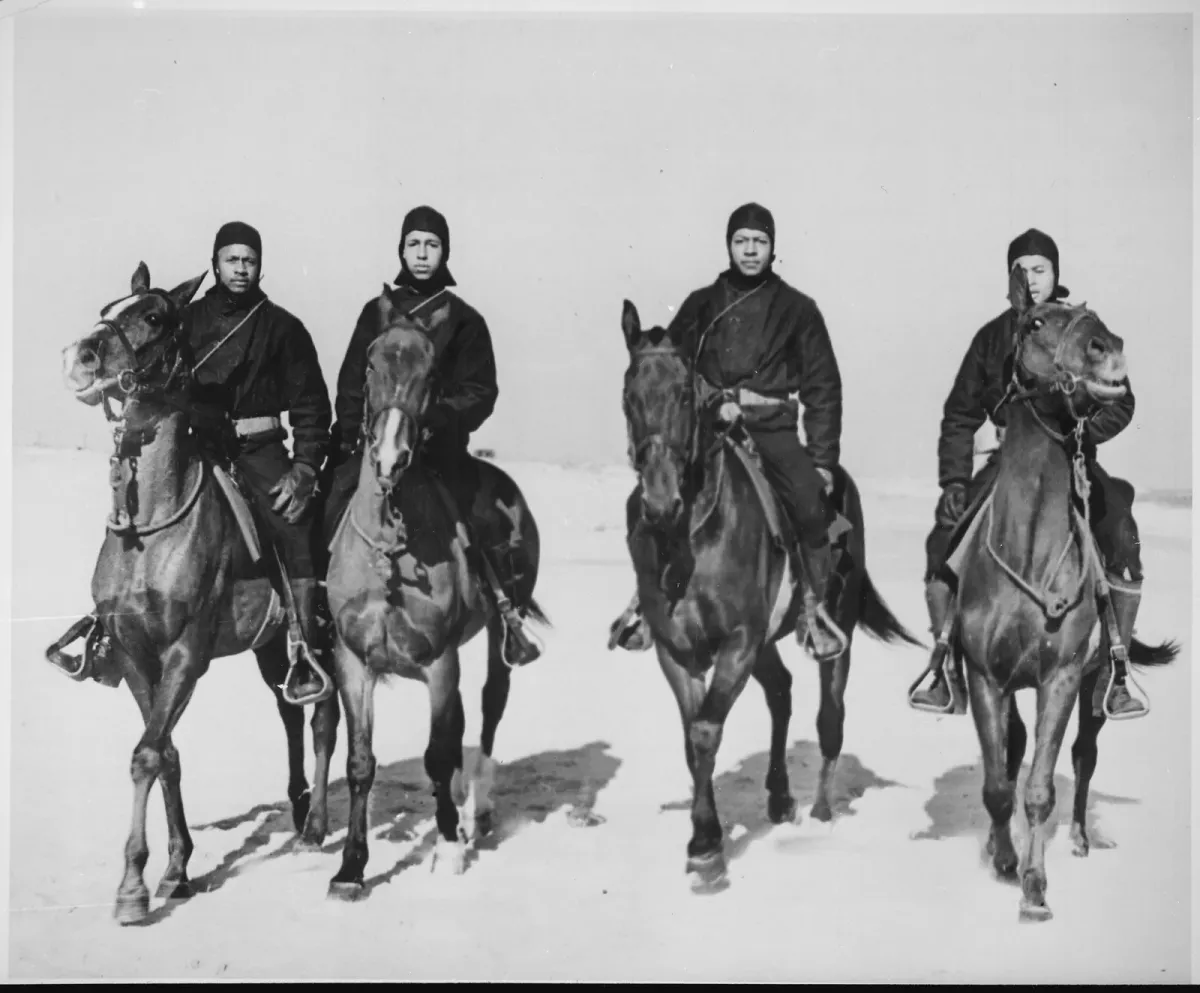
The Coast Guard went to the Navy again in November 1941, and close to 250,000 men and women served in it during World War II. Shortly after midnight on June 13, 1942, Coast Guardsman John Cullen, patrolling the beach alone from the Amagansett station on Long Island's South Fork, came upon four German saboteurs who had just landed from a U-boat. He pretended to take their bribe, then hurried back to report them. Within two weeks the FBI had arrested them and a second team that landed in Florida.
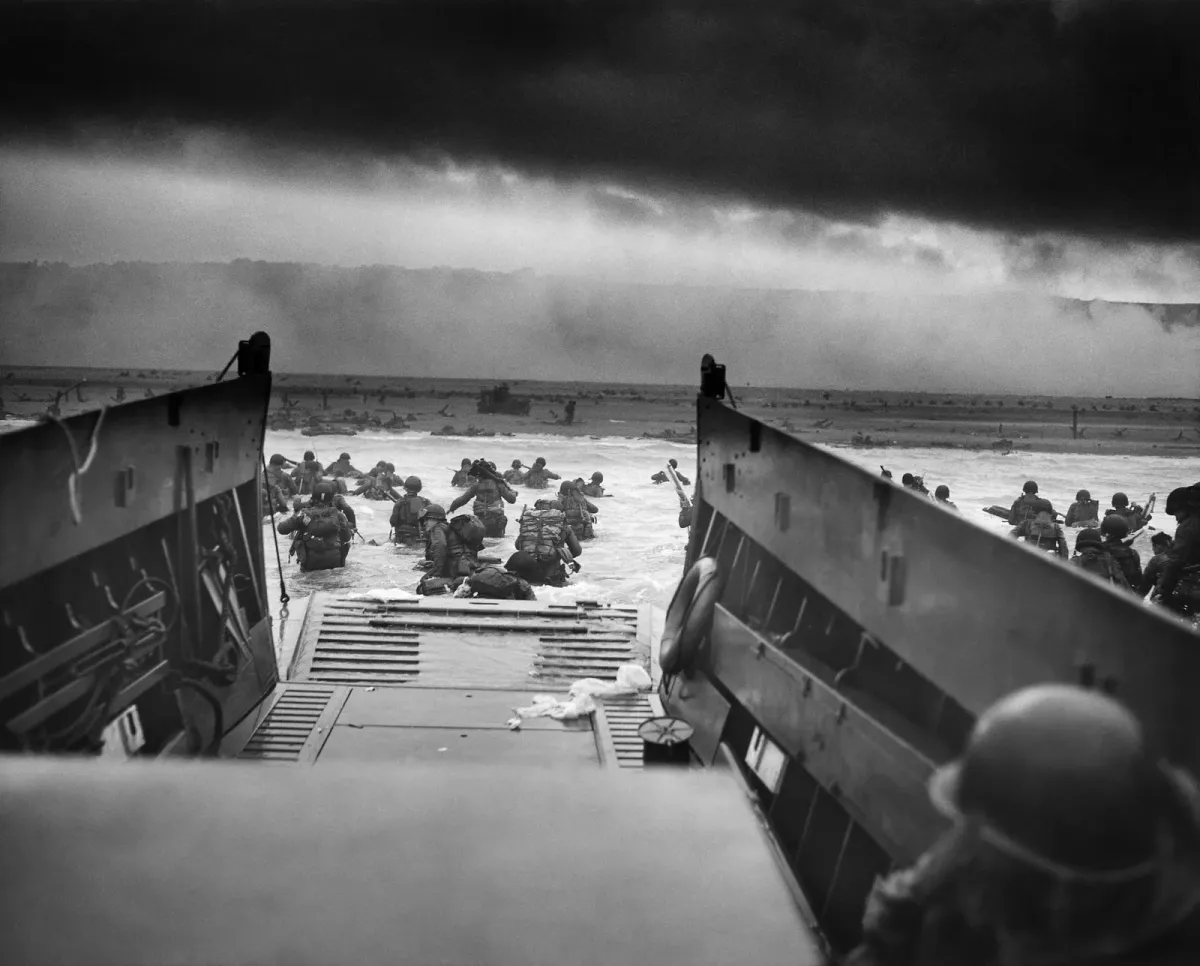
Overseas, Coast Guard crews manned transports and landing craft from Guadalcanal and North Africa to Normandy and Okinawa. On D-Day, June 6, 1944, the sixty 83-foot patrol boats of the Coast Guard's Rescue Flotilla One saved more than 400 men.
At Guadalcanal on September 27, 1942, Signalman First Class Douglas Munro, who grew up in Cle Elum, Washington, volunteered to lead landing craft back to a beach near the Matanikau River where Marines had been cut off. Under heavy fire he placed his boat between the enemy and the withdrawing Marines, and every Marine got off the beach. Munro was killed as the boats pulled away. He was awarded the Medal of Honor after his death, and remains the only member of the Coast Guard to receive it.
Congress created the Coast Guard Women's Reserve on November 23, 1942. Its director, Dorothy Stratton, is believed to have named it the SPARS, after Semper Paratus and its meaning, Always Ready. More than 10,000 women served, mostly ashore, freeing men for duty at sea.
Revenue cutters also served in the Civil War, Coast Guard cutters kept weather and rescue watch in the North Pacific during the Korean War, and in Vietnam the patrol boats of Coast Guard Squadron One searched coastal traffic for enemy supplies.
The Coast Guard Today
After World War II the Coast Guard returned to the Treasury. It moved to the Department of Transportation in 1967 and to the new Department of Homeland Security, which began operating on March 1, 2003. By law it is a military service and a branch of the armed forces at all times, and in wartime it can be placed under the Navy.
The Homeland Security Act of 2002 gives the Coast Guard eleven missions. In plain terms, its work includes:
- Search and rescue: helping boaters, fishermen and ships in trouble.
- Law enforcement: stopping drug smuggling and illegal migration by sea, and enforcing fishing laws.
- Safety and navigation: inspecting vessels, licensing mariners, and keeping up buoys and lights.
- Ice operations: breaking ice so ships can move, and running the International Ice Patrol, an iceberg watch begun after the Titanic sank in 1912.
- Environmental protection: preventing and responding to oil and chemical spills.
- National defense: guarding ports and coastal waters, and serving alongside the other armed forces.
On September 11, 2001, after hijacked airliners struck the World Trade Center, the bridges, tunnels and subways out of Lower Manhattan shut down, and crowds streamed to the waterfront. The Coast Guard radioed for all available boats. Lt. Michael Day, broadcasting from a borrowed Sandy Hook pilot boat, directed the ferries, tugboats, tour boats and private craft that answered, well over 100 in all, while Coast Guard inspectors guided people on the piers and made sure no boat left overloaded. The boats carried people to New Jersey, Staten Island and Brooklyn and brought rescue workers and supplies back. No exact count was possible, but the figure most often given, including by the Coast Guard's historians, is an estimated half a million people in under nine hours. The Coast Guard calls it the largest evacuation by sea in recorded history.
After Hurricane Katrina in 2005, the Government Accountability Office reported that the Coast Guard saved more than 33,500 people. Closer to home, Coast Guard Station Fire Island, descended from the 1849 lifesaving station, is still in operation on the waters the surfmen once watched.
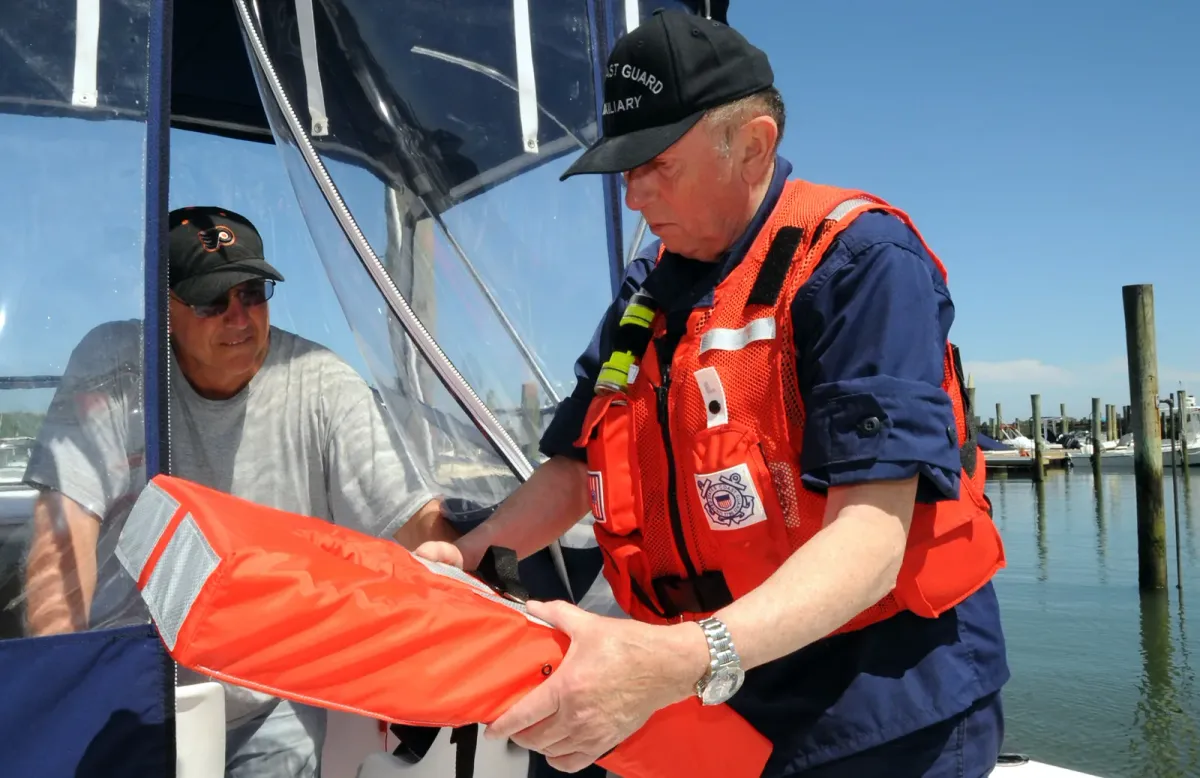
The Coast Guard also has a volunteer arm. In June 1939 Congress created a civilian Coast Guard Reserve of boat owners to make recreational boating safer and to lend the service a hand. It became the Coast Guard Auxiliary in February 1941, when the Reserve name passed to a new military reserve. During World War II many Auxiliarists also joined the new Temporary Reserve, most serving part-time and without pay, and guarded docks, bridges, beaches and harbors so that more regulars could be sent overseas. Today the Auxiliary has more than 20,000 members. They teach boating safety classes, offer free vessel safety checks, patrol in their own boats and help out at Coast Guard stations, for example by standing radio watch. On Long Island, a Babylon-based flotilla runs search and rescue boats on the Great South Bay and off the ocean beaches, working under Station Fire Island.
Semper Paratus
The Coast Guard's motto, Semper Paratus, is Latin for Always Ready. Even the service's historians are unsure how it was adopted, but it was an old watchword of the revenue cutters and was officially recognized in 1910. Captain Francis Saltus Van Boskerck later made it the title of the Coast Guard's song, writing the words aboard the cutter Yamacraw in 1922. From Hamilton's ten cutters to the crews on duty today, the motto still describes the job.