
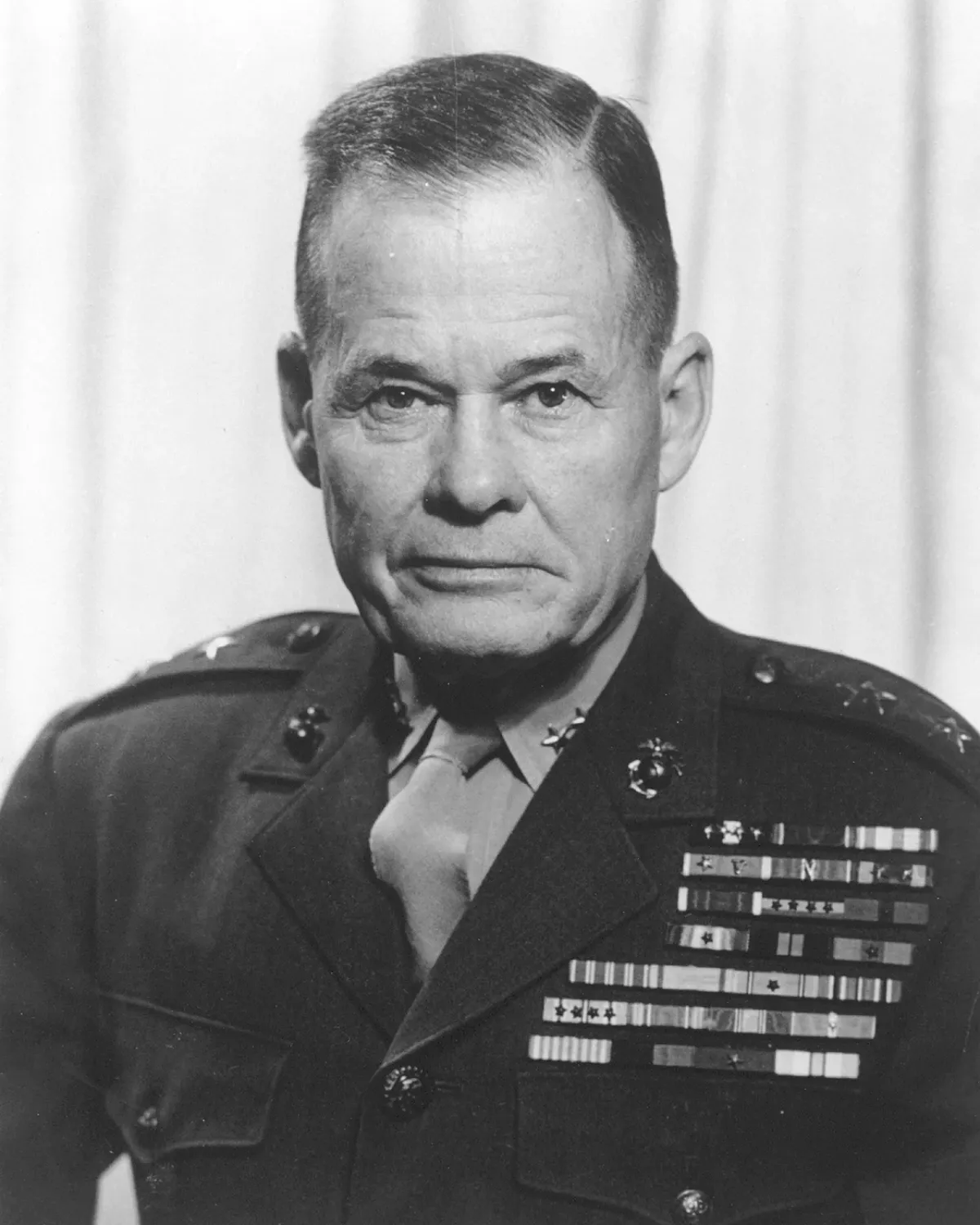
Ask Marines to name the greatest figure in their Corps' history and many will answer without hesitation: Lewis Burwell Puller, known to nearly everyone as "Chesty." Across 37 years in uniform he rose from private to lieutenant general, fought in the Caribbean, Central America, the Pacific and Korea, and became the only Marine ever awarded the Navy Cross five times.
His story has also gathered a thick layer of legend. Drawing mainly on Marine Corps History Division records, this article separates what is documented from what is folklore.
Early Life and the Banana Wars
Puller was born on June 26, 1898, in West Point, Virginia. He entered the Virginia Military Institute in 1917 but left after about a year, enlisting in the Marine Corps in August 1918 in hopes of reaching the fighting in France. The armistice came first.
As the Corps shrank after the war, Puller was commissioned a reserve second lieutenant in 1919 and placed on inactive duty days later. He reenlisted instead and was sent to Haiti, where Marines served as officers of the Gendarmerie d'Haiti, a Haitian force set up under a treaty with the United States. He spent nearly five years there, often in combat against Caco rebels, and in 1924 received a regular commission as a second lieutenant.
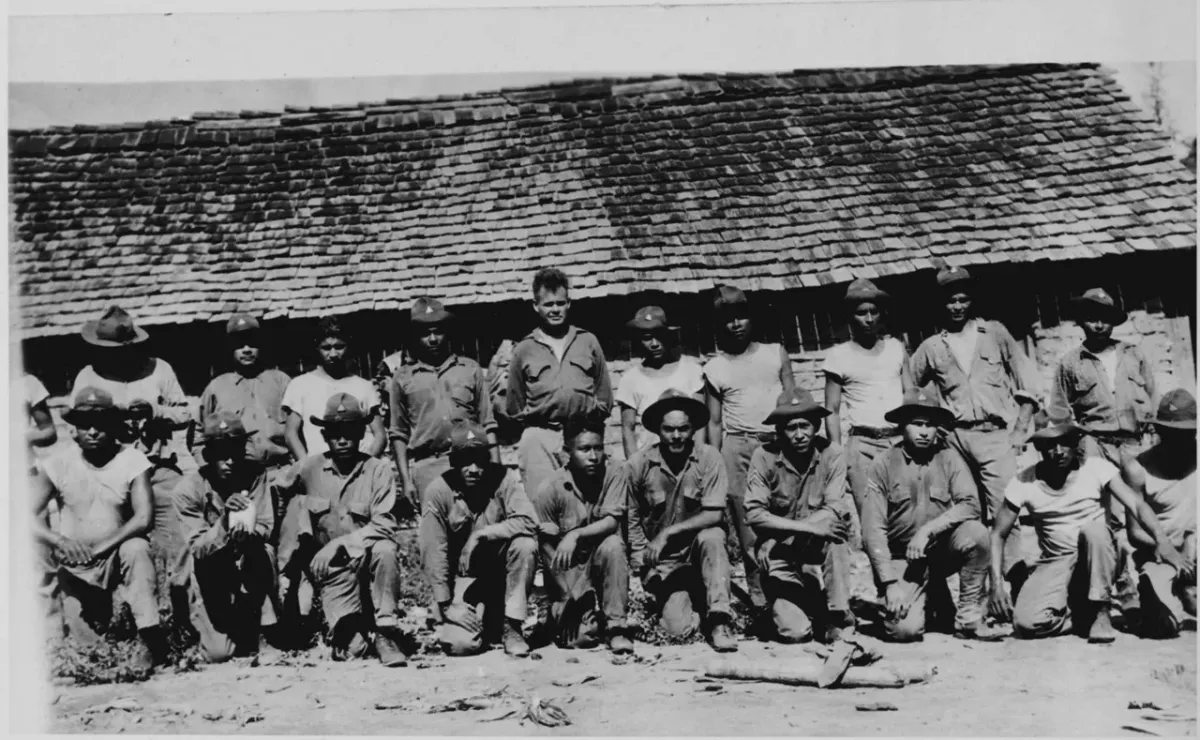
In Nicaragua he led local soldiers of the Guardia Nacional against armed rebel bands, earning one Navy Cross for a string of engagements in 1930 and another for patrol fighting in September and October 1932. In 1933 he went to China, where he commanded the famous "Horse Marines," the mounted guard at the American Legation in Peiping.
World War II: Guadalcanal, Cape Gloucester and Peleliu
In September 1941, three months before Pearl Harbor, Puller took command of the 1st Battalion, 7th Marines, which reached Guadalcanal a year later. On the rainy night of October 24 to 25, 1942, his Marines, spread across more than a mile, held off repeated assaults by a Japanese regiment trying to reach Henderson Field, the airstrip at the center of the campaign. Puller directed the fight in person until reinforcements arrived. He earned a third Navy Cross, and one of his machine gun sergeants, John Basilone, received the Medal of Honor for the same night. Puller was also wounded during the campaign.
His fourth Navy Cross came in January 1944 at Cape Gloucester, on the island of New Britain, where he was executive officer of the 7th Marines. When two battalions lost their commanders to wounds, Puller took charge of both under machine gun and mortar fire and led the attack that captured a heavily defended enemy position. A month later he was given command of the 1st Marines.
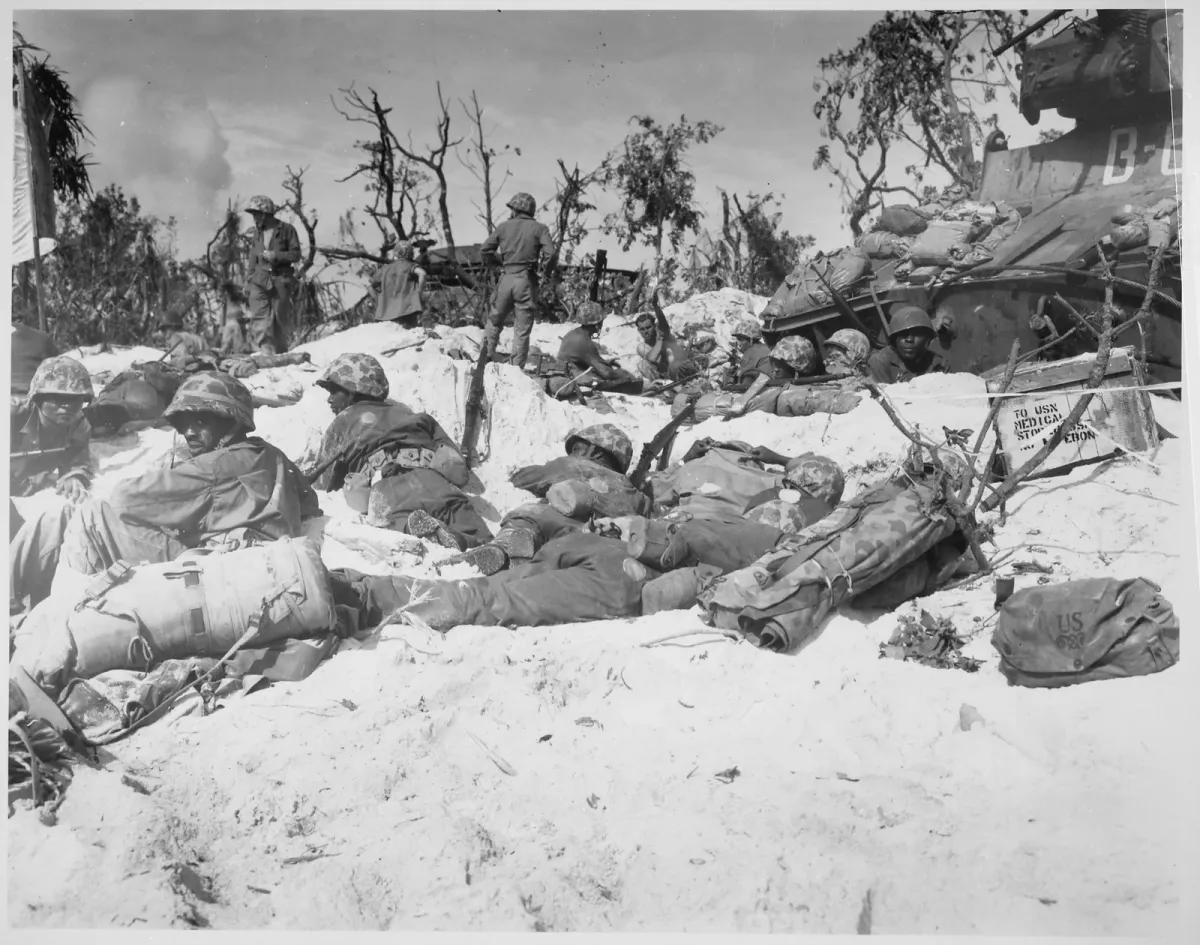
He led that regiment ashore at Peleliu on September 15, 1944. Japanese defenders were dug deep into coral ridges, above all the high ground Marines named Bloody Nose Ridge. In roughly ten days the regiment suffered 1,749 casualties, more than half its strength, and was pulled out of the line. Historians still debate the costly frontal attacks made there.
Korea: Inchon and the Chosin Reservoir
In August 1950 Puller was sent to Camp Pendleton, California, to rebuild the 1st Marines for the war in Korea. The regiment landed at Inchon on September 15, 1950, and fought its way into Seoul. The Army awarded him its Silver Star for the landing.
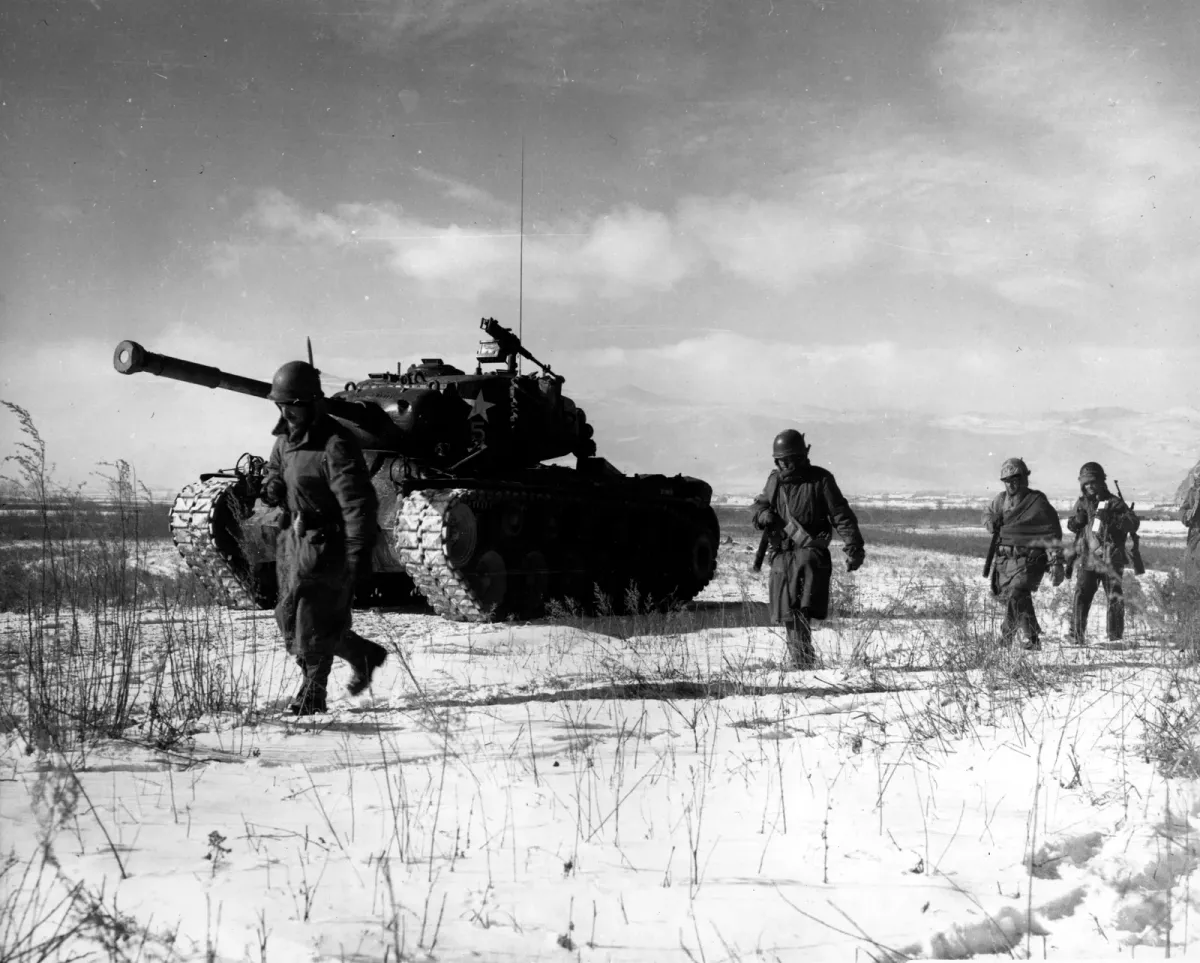
That winter, Chinese forces struck the 1st Marine Division around the Chosin Reservoir. From his headquarters at Koto-ri, Puller held his stretch of the single mountain road the division depended on, and when the Marines fought their way out to the port of Hungnam, his regiment served as the rear guard. His fifth Navy Cross, covering December 5 to 10, 1950, opens its account of his actions with the words "Fighting continuously in sub-zero weather against a vastly outnumbering hostile force." The Army added its Distinguished Service Cross. In January 1951 he was promoted to brigadier general.
Five Navy Crosses and Other Honors
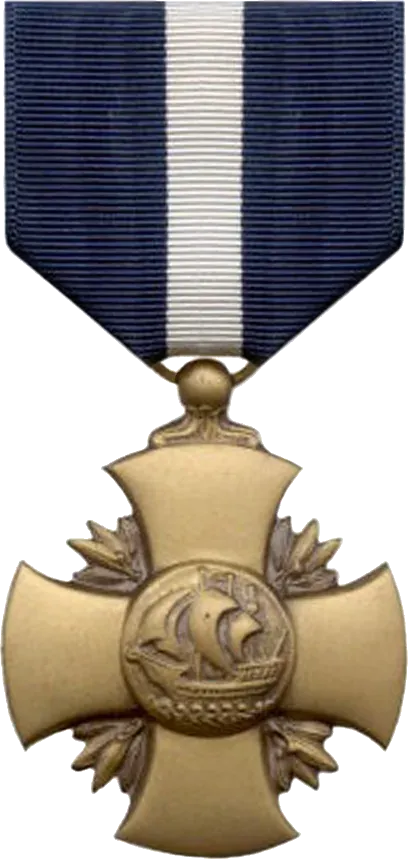
For sailors and Marines, only the Medal of Honor ranks above the Navy Cross as an award for heroism. Puller's five came from:
- Nicaragua, 1930
- Nicaragua, September and October 1932
- Guadalcanal, October 24 to 25, 1942
- Cape Gloucester, January 1944
- Chosin Reservoir, December 5 to 10, 1950
The History Division counts 14 personal decorations earned in combat, not including foreign awards. Besides the Navy Crosses, they include the Army's Distinguished Service Cross and Silver Star, two Legions of Merit, the Bronze Star, three Air Medals for flights over enemy territory in Korea, and the Purple Heart.
Is he truly the most decorated Marine in history? The Navy often says so. The History Division's official biography is more measured, calling him one of the most decorated Marines and the only one with five Navy Crosses. Because he never received the Medal of Honor, the title depends on how awards are weighed. The five Navy Crosses are beyond dispute.
Family, Retirement and Final Years
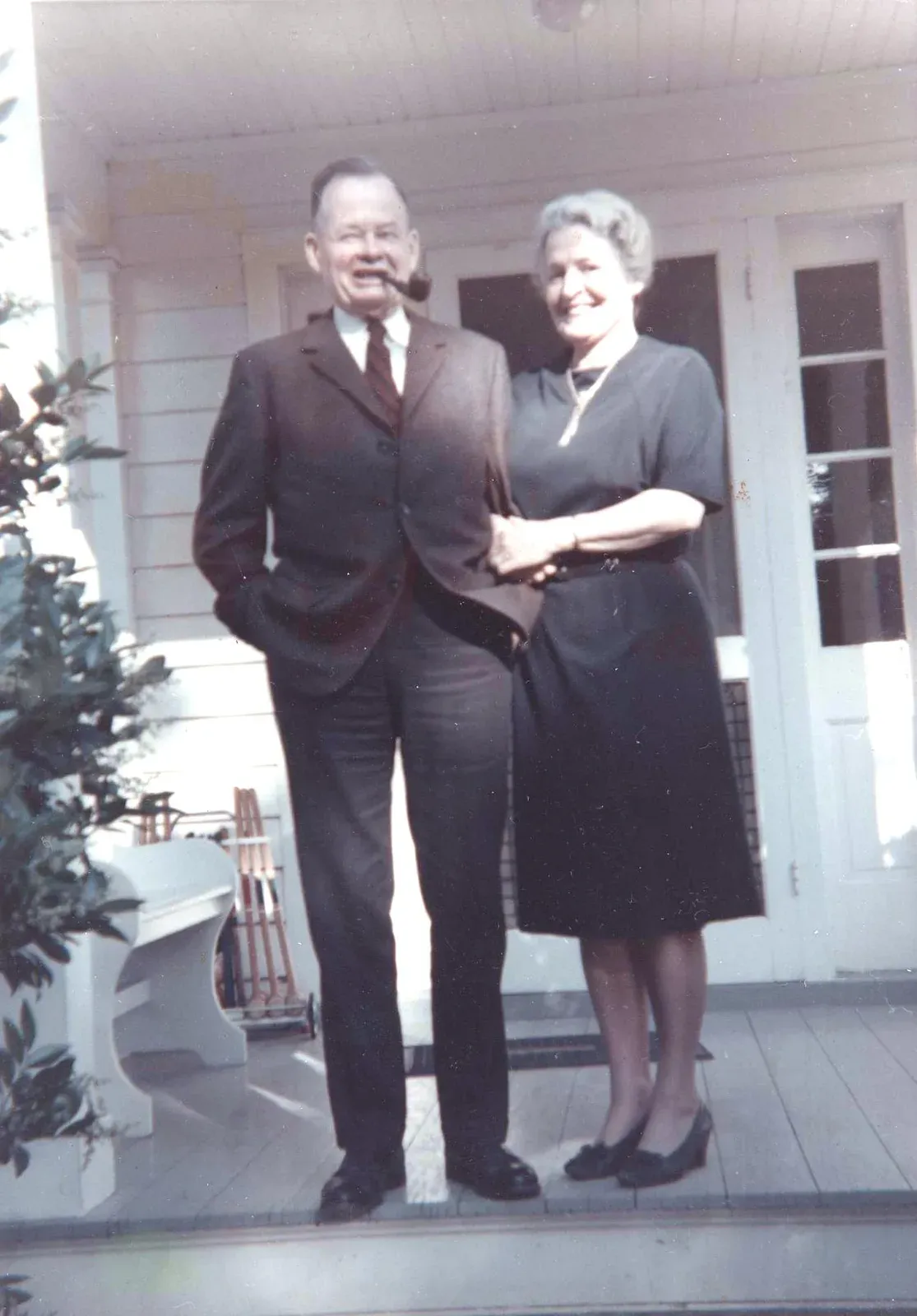
In 1937 Puller married Virginia Montague Evans of Saluda, Virginia. They had a daughter, Virginia, born in Shanghai in 1940, and twins, Martha and Lewis Jr., born in 1945.
Promoted to major general in 1953, Puller took command of the 2nd Marine Division at Camp Lejeune, North Carolina, in July 1954, but fell seriously ill the next month. He retired on November 1, 1955, receiving his third star as a lieutenant general on retirement. At the small ceremony he asked a sergeant major who had served under him as a private in 1926 to pin on the new insignia, saying he wanted to honor the Corps' enlisted Marines. He and Virginia settled in Saluda.
In 1968 their son, a Marine lieutenant, was gravely wounded by a booby trap in Vietnam, losing both legs and parts of both hands. He later wrote Fortunate Son, a memoir that won the Pulitzer Prize. After a series of strokes, the elder Puller died on October 11, 1971, in Hampton, Virginia, at age 73. He is buried in the Christ Church cemetery in Middlesex County, near Saluda.
Fact and Legend
Even the Marine Corps' own historians caution against picturing him as superhuman. Several famous stories deserve a closer look.
- The remark at Chosin. Puller reportedly said that being surrounded at least solved the problem of finding the enemy. The History Division's short biography repeats it, but the wording varies between accounts, so no version should be treated as exact.
- The nickname. There is no firm record of how he became "Chesty." The usual explanation is his barrel chest and ramrod posture. A popular tale that surgeons rebuilt his chest with steel is folklore.
- The one-liners. Many quips credited to him, such as asking where the bayonet goes on a flamethrower, or wanting to visit the brig to meet the "real" Marines, could not be confirmed in any reliable firsthand source we checked. Even Marines quoted in official Corps news stories admit it is hard to tell which tales are true.
- What is solid. His record and citations describe a commander who led from close to the fighting and never forgot the enlisted ranks he came from. It needs no embellishment.
Tradition, Memory and Portrayals
Every Marine recruit learns Puller's name, and many Marines describe an unofficial boot camp custom, found in no manual, of ending the day with "Good night, Chesty, wherever you are!"
Since July 5, 1957, the mascot of Marine Barracks Washington, the Corps' oldest post, has been an English bulldog named Chesty in his honor; the seventeenth was introduced in 2026. The Navy has named two ships for Puller: a guided missile frigate commissioned in 1982, sponsored by his widow, and an expeditionary sea base commissioned in 2017. In 2006 his family gave many of his belongings to the National Museum of the Marine Corps.
On screen, actor William Sadler played Puller as a battalion commander on Guadalcanal in HBO's 2010 miniseries The Pacific, mostly in its early episodes. Like any dramatization, it invents dialogue, so it is a starting point rather than a historical record.
More than fifty years after his death, Puller is still the Marine other Marines measure themselves against. He is best remembered as he was: a Virginian who joined as a private, led from the front for nearly four decades, and cared deeply about his Marines.